
This platform was designed for Autotrend to replace fragmented vehicle-movement processes with a structured logistics system across mobile and web. It coordinated requests, confirmations, planning, notifications, key-status tracking, and vehicle localization across internal departments under one operational model.
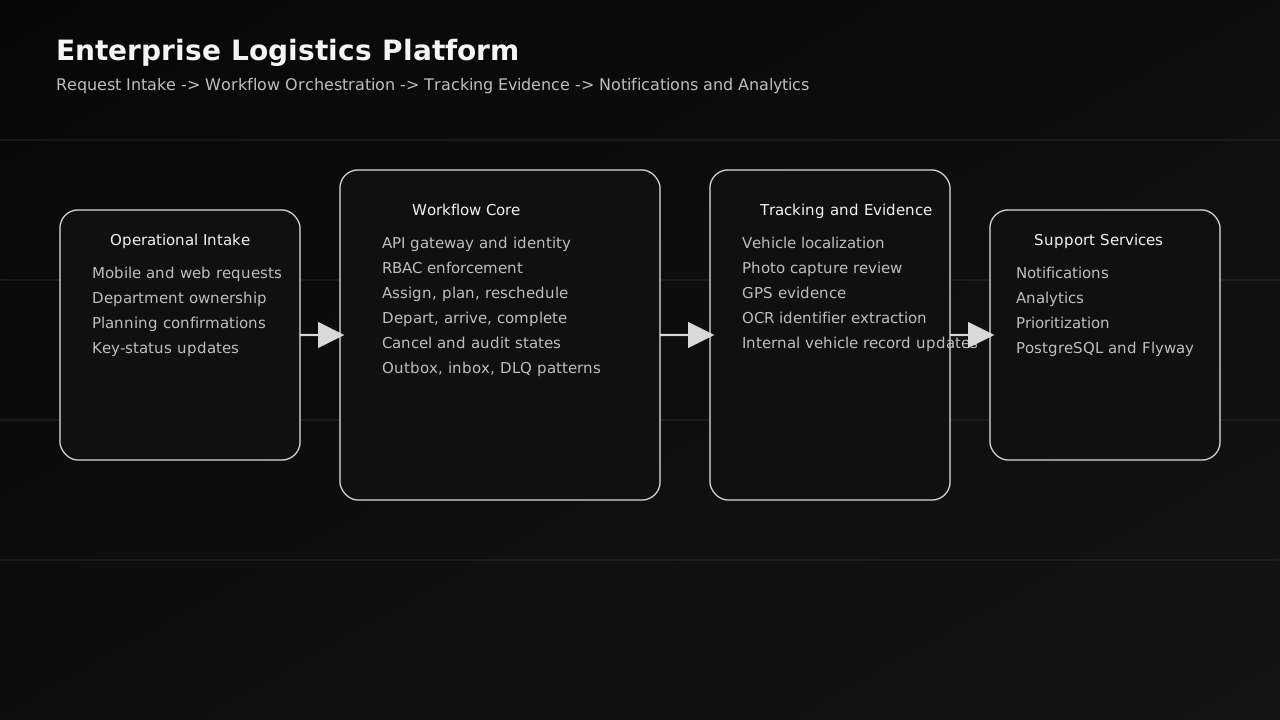
Problem
Autotrend needed a structured way to coordinate internal vehicle movement across logistics, commercial, workshop, administration, and IT without relying on fragmented manual processes.
Constraints
- Workflows had to support different roles, permissions, and ownership boundaries across departments.
- Request execution needed explicit state transitions with accountability for planning, rescheduling, departure, arrival, completion, and cancellation.
- Vehicle records had to be enriched from operational activity through photo, GPS, and OCR-based evidence handling.
Architecture
- Enterprise microservices split across API gateway, identity, logistics, tracking, notifications, analytics, and prioritization domains.
- Role-based access control with internal data ownership boundaries and Flyway-managed schema evolution.
- Mobile and web delivery for request creation, logistics coordination, confirmations, and execution tracking.
- Outbox, inbox, and DLQ reliability patterns to protect cross-service workflow delivery and recovery.
Tradeoffs and Failures
- Strong workflow control improved auditability but required careful handling of exceptions and reschedules.
- Service separation improved maintainability and rollout readiness while increasing integration and contract-governance pressure.
- Evidence-rich localization improved fleet visibility but introduced additional review steps for image quality, OCR confidence, and GPS consistency.
Engineering Impact
- Replaced ad hoc coordination with a controlled end-to-end request and confirmation lifecycle.
- Improved operational visibility through notifications, key-status tracking, and localization evidence flows.
- Established a backend foundation prepared for future infrastructure hardening and broader enterprise rollout.
Outcomes
- Clearer accountability across status changes and handoffs between departments.
- Better internal visibility into vehicle location, planning state, and execution progress.
- More scalable logistics operations through explicit service boundaries and governed API contracts.
What Made This Approach Different
The platform treated internal logistics as an operational system of record, not just a request board. Vehicle movement, confirmations, notifications, key tracking, and localization evidence all belonged to one controlled workflow model.