
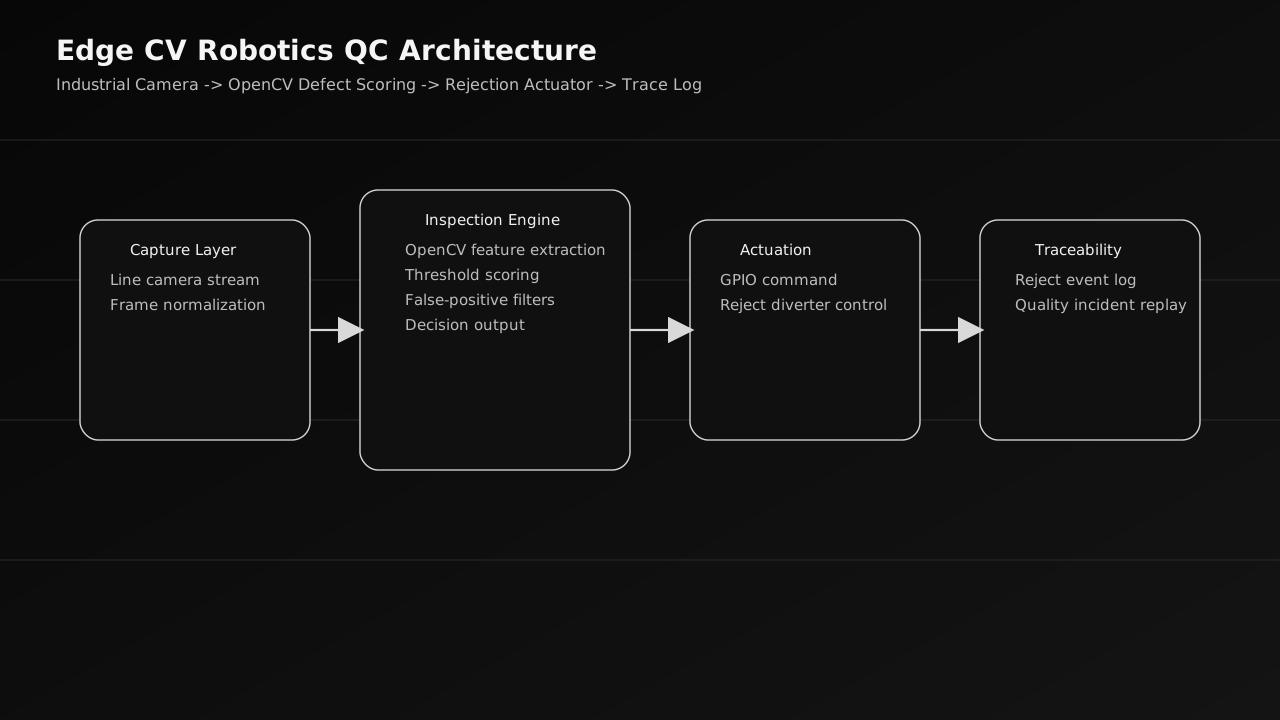
This system automated visual quality decisions on a live production line by combining camera-based scoring, threshold logic, and actuator control. The key objective was deterministic low-latency rejection with traceable decisions.
Problem
Manual inspection could not keep pace with throughput variability and introduced inconsistent reject decisions.
Constraints
- Decision latency had to stay within the line cycle time.
- False positives had to be controlled to avoid unnecessary product waste.
- Every rejection event needed traceability for root-cause analysis.
Architecture
- Edge execution close to cameras and actuators to minimize response latency.
- OpenCV-based feature extraction with threshold calibration tuned to product classes.
- GPIO actuation path for deterministic reject commands.
- Structured event logging to map visual evidence to reject actions.
Tradeoffs and Failures
- Aggressive thresholds reduced escapes but increased false rejects.
- Conservative thresholds lowered waste but risked passing borderline defects.
- Lighting and camera-angle drift required ongoing recalibration.
Engineering Impact
- Replaced manual spot checks with deterministic machine-assisted decisions.
- Connected inspection output directly to mechanical response.
- Improved post-incident debugging with decision logs tied to timestamps and events.
Outcomes
- Faster reject loop under real line load.
- More consistent reject criteria across shifts.
- Better quality incident traceability and operational feedback.
What Made This Approach Different
The design focused on closed-loop behavior (detect -> decide -> actuate -> log), not just model accuracy in isolation.