
Examen is a production-style reflective journaling product where consistency mattered more than visual novelty. The implementation centers on a guided daily flow, strict session rules, and analytics that convert raw answers into actionable trends.
Problem
Most journaling tools are either too open-ended or too rigid. The product goal was a guided reflection flow that users can repeat daily while still capturing useful data over time.
Constraints
- Reflection sessions needed anti-spam controls (cooldown and active-session guard) so trends are reliable.
- Authentication and password reset flows had to be secure enough for real user accounts.
- The same domain logic had to support web UX, analytics, reminders, and export features without diverging models.
Architecture
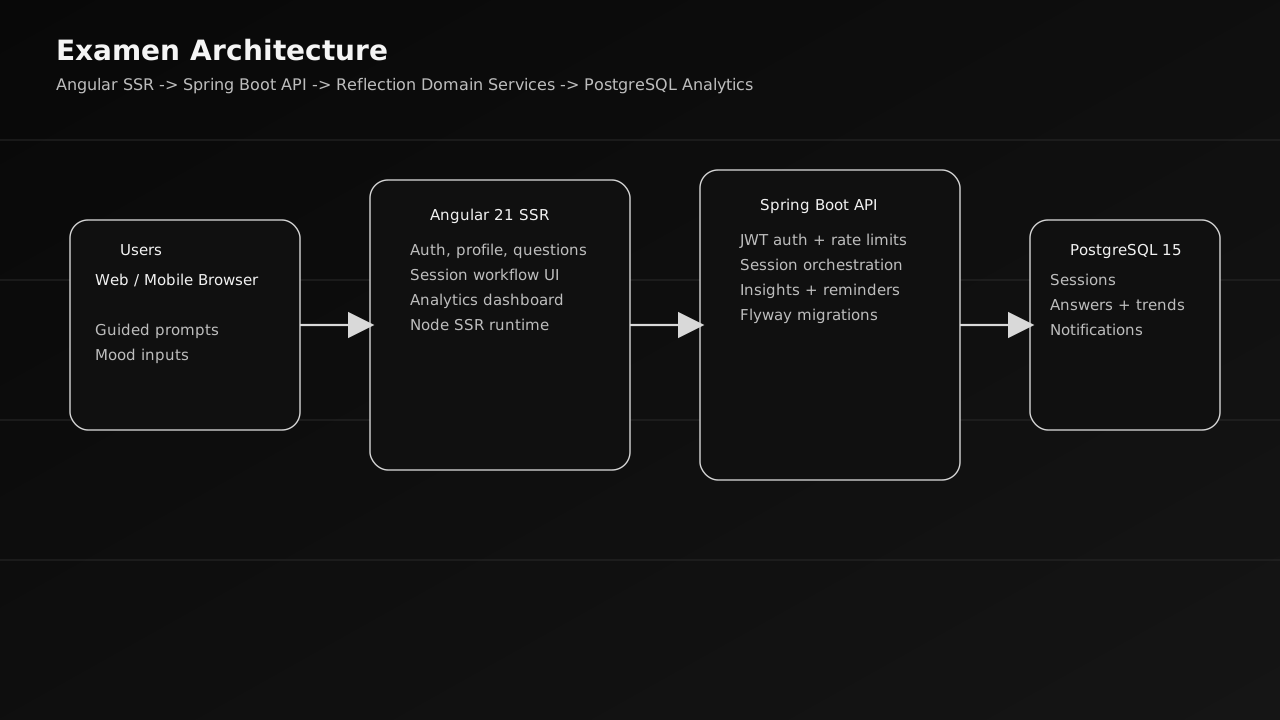
- Angular SSR for SEO-aware rendering, route-level UX speed, and content discoverability.
- Spring Boot service layer separated by controllers, DTOs, services, and repositories to keep business rules explicit.
- PostgreSQL + Flyway migrations for deterministic schema evolution and environment consistency.
- Docker Compose for repeatable local setup across frontend, backend, and database.
Tradeoffs and Failures
- SSR improved SEO and first render quality, but increased build/runtime complexity versus SPA-only delivery.
- Strict session guards improved data quality, but initially felt restrictive for users testing the app.
- Reminder and email flows introduced operational overhead (SMTP configuration and rate-limit tuning).
Engineering Impact
- Converted unstructured journaling into a domain model with stable entities (sessions, answers, categories, trends).
- Established reusable API contracts for profile analytics, growth endpoints, and reminder workflows.
- Reduced manual ops friction with migration-based schema control and containerized deployment.
Outcomes
- End-to-end full-stack delivery with production-grade concerns (auth, rate limits, migrations, health checks).
- Higher consistency in reflection data due to workflow constraints and guided prompts.
- Platform extensibility: habits, gratitude, notifications, and analytics were added without reworking core entities.
What Made This Approach Different
The system was designed as a behavior product first and a CRUD app second. Architectural decisions prioritized daily repeatability, data reliability, and long-term trend quality over feature count.